

Herbal Magick 101 // How to Get Started with Herbal Magick
Herbal magick is the practice of working with plants in magic. This could mean working with plants for healing, eating, ritual, spellwork, and more.Why work with herbal magick? To me, plants connect us to ancestry and the land we’re on. They root us into relationship with nature, with mother Earth. They have energy and magic of their own that can amplify a spell, help us heal, and support our intentions. Part of living a magical life is engaging with the world around us, and working with plants feels like a powerful way to do that.
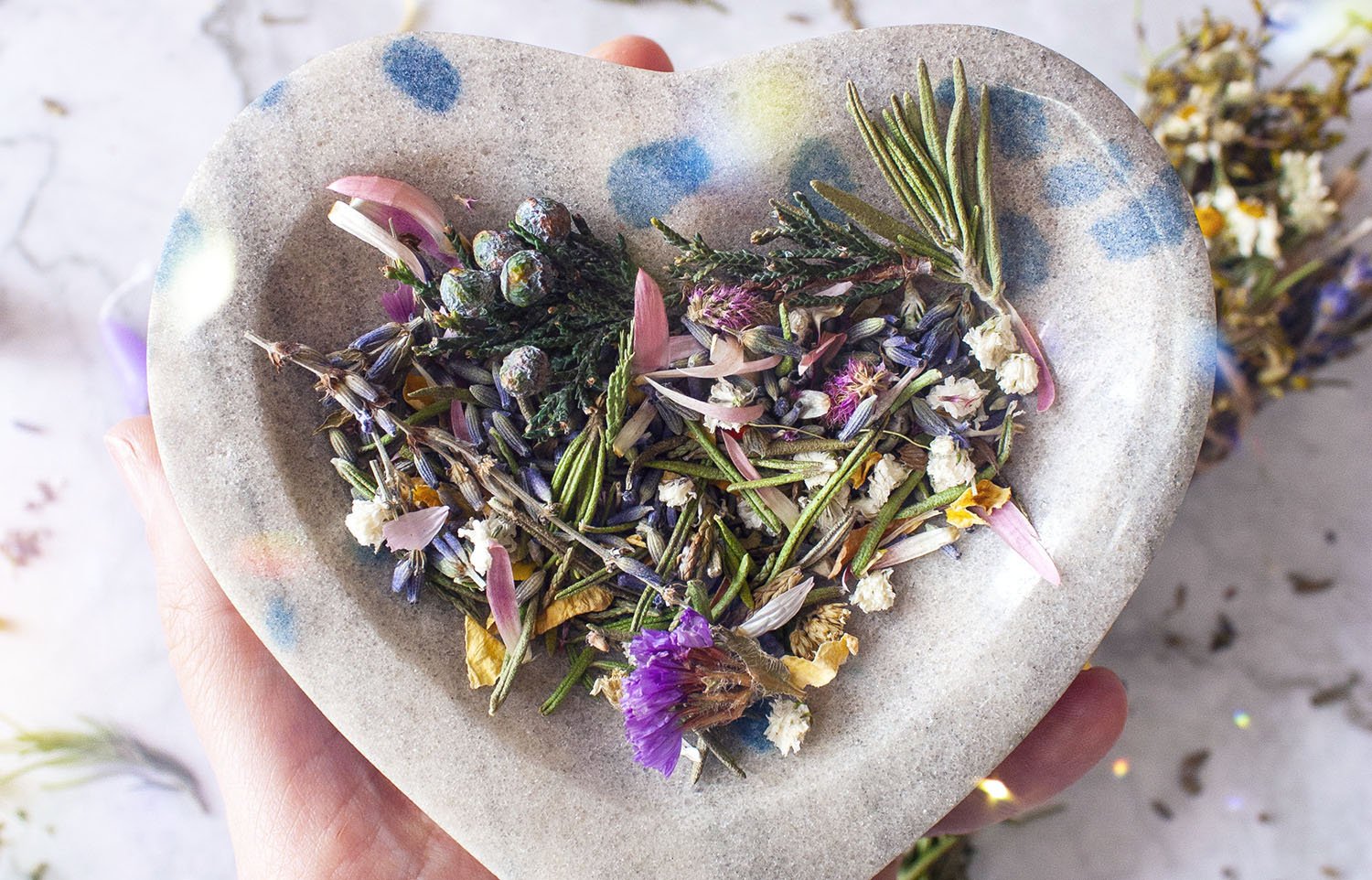
Herbal magick is the practice of working with plants in magic. This could mean working with plants for healing, eating, ritual, spellwork, and more.
Why work with herbal magick? To me, plants connect us to ancestry and the land we’re on. They root us into relationship with nature, with mother Earth. They have energy and magic of their own that can amplify a spell, help us heal, and support our intentions.
Part of living a magical life is engaging with the world around us, and working with plants feels like a powerful way to do that.
In this blog post, I’ll be sharing about how to get started with herbal magick. Please note that this is coming from my perspective as someone who works with plants personally and is not an herbalist or trained professional!
GETTING STARTED WITH HERBAL MAGICK
Getting started with herbal magick can feel overwhelming. There are so many plants! What do they all mean? What do you use them for?
I recommend starting your herbal magick journey by asking this question:
What plants do I have relationships with already/love/feel curious about/find myself attracted to?
You can jot down a list or just one plant that comes to mind. Maybe it’s a plant you’ve heard about being connected to your ancestors, like rosemary. Maybe it’s a plant that grows in your yard or your local park, or one you love to drink in your tea.
Choose a plant from your list and commit to getting to know it. There are so many ways to cultivate a relationship with plants, but here are a few:
Meditate with the plant daily
Take the plant as a flower essence
Eat the plant or drink the plant in a tea (check with an herbalist first as needed)
Take a bath with the plant (check with an herbalist first as needed)
Journal with the plant
Work with the plant in ritual
Invite the plant into your dreams
Spend time with the plant
Grow the plant and tend to it

Featured cards are from The Ritual Deck.
Take your time with this process - perhaps sitting with one plant for at least a month or two. Write about your insights as you cultivate this relationship. How do you feel? What is this plant teaching you? How does it feel best to work with this plant?
Another important question to ask yourself is: how am I in a reciprocal relationship with this plant? That could look like giving the plant or the land offerings, planting this plant’s seeds, or something else that feels right to you.
Many herbalists are talking about being in a reciprocal relationship with plants, so I recommend checking out their work (Sarah Corbett over at Rowan and Sage is a great place to start) to learn more about being in right relationship rather than just extracting from plants.
Over time, as you cultivate relationships with plants one at a time, you can start to make note of your own magical herbal correspondences. What plants support you in different ways? From sitting with them deeply, what plants help you soothe anxiety, sleep, open your heart, tend to grief, cultivate joy, access pleasure, focus, and more? What plants aid your love spells, money spells, self-trust spells?
This is how herbal magick can become intuitive and not prescriptive, how it becomes more personal and more powerful than a Google search could ever be.
Sending you lots of love on your herbal magick journey! Click here to learn more about crafting herbal smoke wands, or here for herbal tea recipes.

The Moon as Shadow Work // How Aligning with the Moon Invites Shadow Work and Tips to Make Lunar Work a Daily Practice
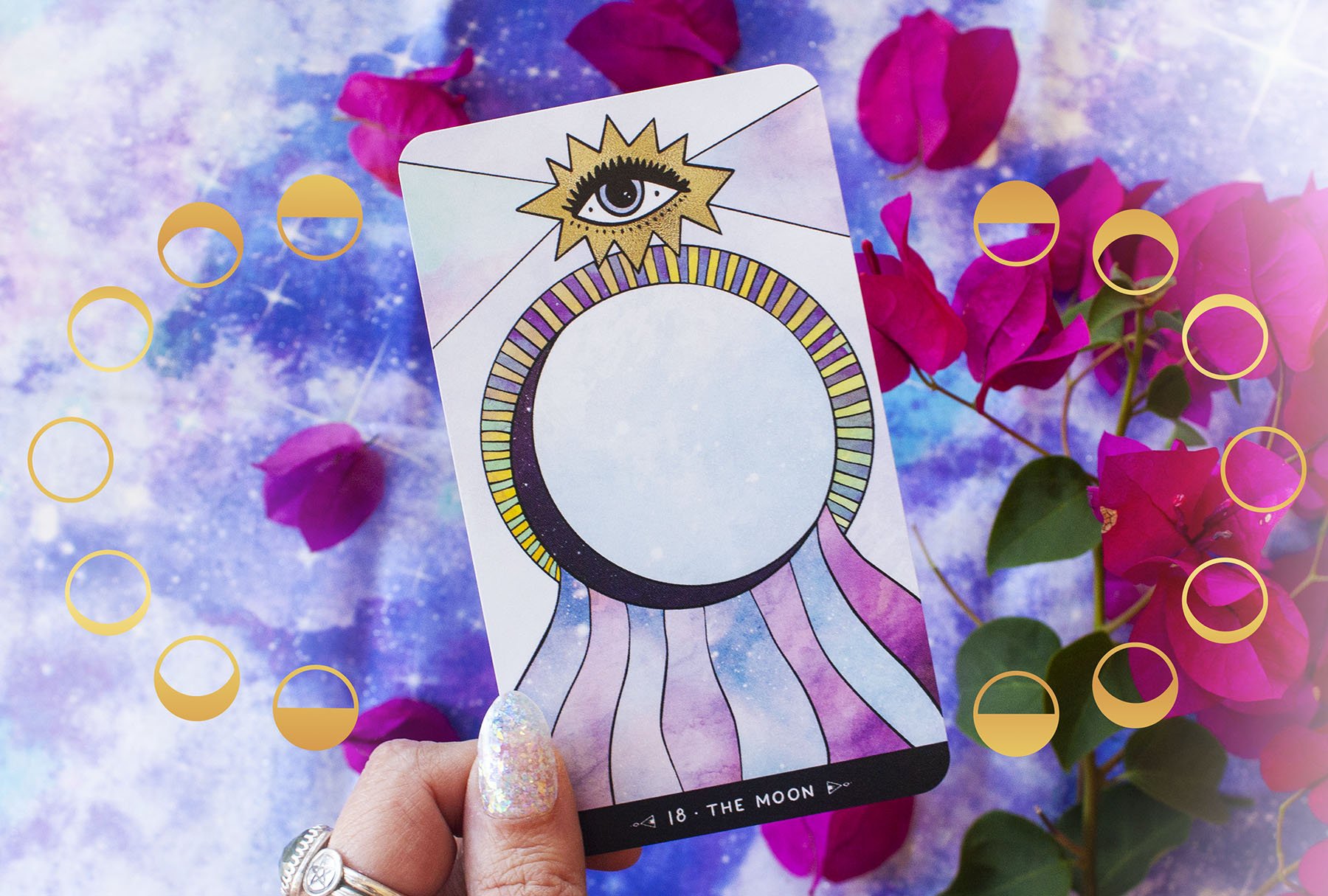
The moon comes after walking through the tower and the renewed spark of inspiration from the star in the tarot. The moon serves as a portal between worlds, sitting in between the star and the sun. The star is the inspiring rebirth and the sun is the ego-self, shining bright. But in between them, the moon shows up to call you inward. It's an invitation to explore everything that's come to pass at the subconscious level.

The moon comes after walking through the tower and the renewed spark of inspiration from the star in the tarot. The moon serves as a portal between worlds, sitting in between the star and the sun. The star is the inspiring rebirth and the sun is the ego-self, shining bright. But in between them, the moon shows up to call you inward. It's an invitation to explore everything that's come to pass at the subconscious level.
It's within this portal that shadow work comes in, which could go by so many other names: soul work, subconscious work, "dark night of the soul," or emotional exploration, etc. Shadow work calls you in to peel away the surface and explore the parts of yourself that you often ignore, hide, or push away.
Listen to this post on my podcast, Rooting into Wholeness, below.
The moon's light is not her own. Its light is reflected by the sun. The moon is the mirror. What shadowy areas within your soul need to have a mirror held up to them?
Shadow work, like the moon, is a portal to wholeness. One cannot exist without the other. Your shadow work is still there even if you are not addressing it. It does not just go away. It remains untouched and undiscovered. A powerful healing tool waiting to be utilized and waiting to bring you to wholeness.
So many want to skip over this important portal. Here's the thing, though. You can't. The opportunity will keep repeating itself until you decide to walk through the shadowing realms of your subconscious. In my experience, I've learned that if you ignore your shadow long enough, it will come crashing down and force you to examine what needs to be learned and seen. No amount of love and light can keep you from knowing all facets of life. We're human. It's why we're here.

How to work with the moon to honor your shadow
How can you embody the energy of the moon, her wisdom, to approach this inner shadow work? It starts as noticing the moon in her phases and turns into allowing these phases to influence your rituals. The shifts will be subtle, but eventually, shadow work will become a regular part of your life. Here are three ways to start weaving more lunar energy into your daily practice.
Much of this work is observational and feeling work that needs to happen within the mind and body. All other tools (crystals, herbs, cards, etc.) and are ancillary allies. Use them if you feel called, but do not let them be prohibitive to your growth if you do not have them handy.
1. Become more aware of the moon. Let's first start by connecting with lunar energy regularly. Track her, notice her, and notice how you feel in her different phases. If working with the moon is new to you, start by solely noticing when the moon is in her waxing phase vs. waning phase (I find this more helpful than tracking the new/full moon.) Learn more about waxing vs. waning lunar energy in a past post here.
When you begin to adopt the moon's cycles into your daily life, you will begin to understand the necessity of living more cyclically. Rather than shaming yourself for needing to go within, you will appreciate it as a natural phase. Here's a non-exhaustive list of some ways that I connect with lunar energy regularly.
Look for the moon anytime you are outside at night or consciously decide to go outside and seek her out regularly. You will soon learn where the moon lives in the sky during different parts of her cycle.
Track her with an app. I like to keep a pulse on when the moon shifts from waxing to waning phase and vice versa. Using an app is an easy way to know when these shifts happen. I also like to know what astrological sign the moon is living in as this also affects her energy. My favorite app is The Moon App. The free version is great, but I prefer the paid version.
Wear a specific piece of jewelry is a reminder of whether the moon is waxing or waning. I have a moon-shaped ring that I flip, so the moon is facing inwards or outwards according to whether the moon is waxing or waning. However, there are many ways to do this. You could wear a specific necklace, ring, or bracelet for waxing vs. waning energy. Doing this brings the energy of the moon into the physical and offers you a daily reminder.
2. Bring the moon into your rituals. If your ritual practices only include rituals to make you feel good or to manifest, you're missing out on some big growth opportunities and magick-making. When you invite lunar energy into your rituals, you open the door to more profound transformations through shadow work. The moon does not stay stuck in her growth, waxing, manifesting phase, and neither should you.
Everyone's ritual practice varies, but there are ways to bring lunar energy into just about any ritual. Bringing lunar energy into your rituals will require you to be more mindful about your ritual practices. Here are a few ways to work lunar energy into common ritual practices.
Burn candles and herbs in line with lunar energy. If candle magick, incense, or herbs are a part of your ritual practice, this is an easy place to honor the moon. How can you be more mindful about what candle colors or herbs you're working with? For example, I would avoid more energizing plants and colors like peppermint, citrus, and candle colors like red, orange, and yellow during a waning moon phase. I will often burn a simple white candle during a new moon, and during a dark moon, phase black.
Invite lunar energy into your meditation practice. Honoring the moon in your meditation practice can be done for each phase or just waxing and waning energy. If you already have a meditation practice, this will be a simple way to begin engaging with the moon's energy on a deeper level. In my meditation practice, this looks like doing more energy clearing at the end of the waning moon phase, being more open to guidance from Spirit at the start of the waxing phase and around the new moon, and focusing on gratitude during the full moon. I wrote a full post about it here.
Place specific items on your altar or sacred space for certain moon phases, or consider an altar refresh for specific moons. If an altar is a part of your ritual practice, be open to how you can weave lunar energy into your sacred space. I usually update my altar based on the seasons. However, some lunar events warrant a full altar refresh. I invite you to trust when you feel called to do this. Even if you don't want to refresh your altar completely, placing specific herbs, candles, or tarot/oracle cards on your altar for specific phases can also be a powerful way to connect with the moon.
Simple changes like these begin to make working with the moon a part of life and a way of living. You can find many blog posts here about working with the specific energy of each moon phase. However, I do find some of these basic things just as impactful as they make honoring and connecting with the moon more of a daily practice rather than something you only do on new and full moons.
3. Study the moon card in the tarot (any deck.) While studying the moon card, notice what comes up for you? Each deck will bring a different kind of flavor, but the energy of the moon card will remain consistent from deck to deck, as will the placement of the card amongst the Major Arcana. This may not be true if working with moon card in an oracle card deck (learn more about the difference between tarot and oracle cards here.)
Notice the cards around the moon in the tarot and the story they tell. Where does the moon sit in the Major Arcana? What cards are nearest to it? I discussed this a bit in the introduction. But one way to view its placement is as a portal between the star and the sun. Like all wisdom from the tarot, allow yourself to be open to different teachings and ideas. This is just one viewpoint. The wisdom in this step will come from finding your own meaning from the moon card in the tarot. Here are some ways to work with this card.
Place the card on your altar or somewhere else where you'll see it regularly.
Journal or meditate on the moon card. What comes up for you when you look at it? What stands out? What does it mean to you at this moment?
Read about the meaning of the card from different perspectives. Some of my favorites are Rachel Pollock's book 78 Degrees of Wisdom and teachings from Lindsay Mack on her podcast Tarot for the Wild Soul.
Draw your own version of the card. What comes to your mind when you think about creating your own version of the moon card? Allow yourself to be a channel for its wisdom.
If you find these offerings overwhelming, begin implementing what feels the most aligned and appealing to you. Or, if you feel up for a fun shift in perspective, select the one that feels the scariest to you!
Working with the moon as a spiritual practice is an invitation to honor all phases of life, including death, shadow, and transformation. These are necessary phases of all life, even yours. When you open yourself up to being in alignment with all of these phases, you open yourself up to being whole, flawed, and simultaneously perfect. The shifts and changes to living alongside the moon will happen slowly over time. Until one day, you realize you allow and honor all of your phases.
This shift is the magick of embodying shadow work, living cyclically, and aligning with the moon. For more on shadow work, check out these past posts.


Fae, Faeries, and Fair folk! Who are They & 3 Ways to Connect with Them
The fae go by a variety of names, including but not limited to fae, fair folk, faeries, and fairies. The size and appearance of faeries will vary depending on your location and personal beliefs. Some see faeries as human-sized, while others see them as smaller beings.Faeries are a magical species of human-like beings. They live in a spirit realm alongside, but separate, from our physical world. This realm is referred to as otherworld or underworld.
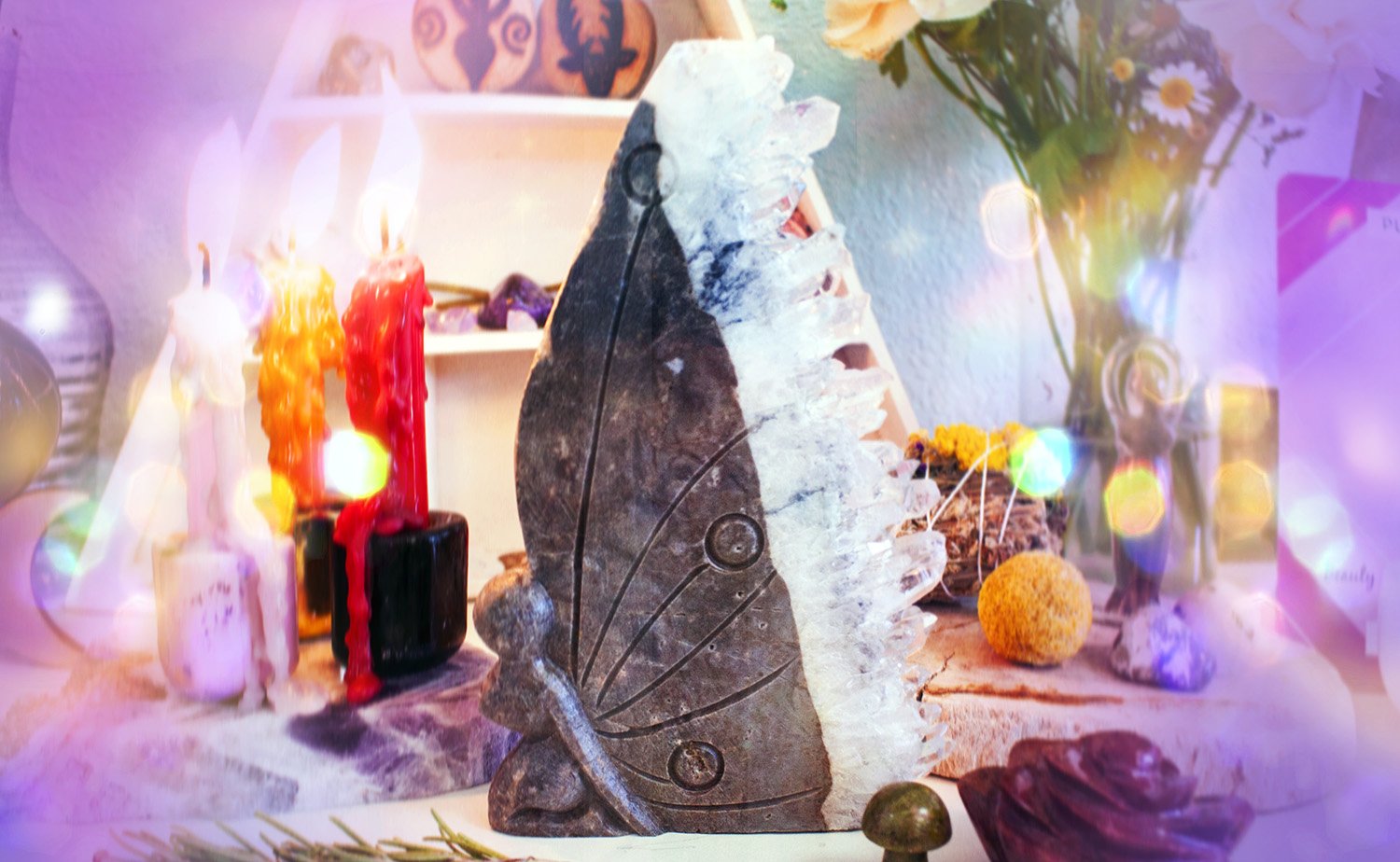
The fae go by a variety of names, including but not limited to fae, fair folk, faeries, and fairies. The size and appearance of faeries will vary depending on your location and personal beliefs. Some see faeries as human-sized, while others see them as smaller beings.
Faeries are a magical species of human-like beings. They live in a spirit realm alongside, but separate, from our physical world. This realm is referred to as otherworld or underworld. In my practice, I refer to this space as otherworld and will refer to it as such throughout the rest of this post.
Similar to humans, the fae are not a monolith! There are benevolent and malevolent faeries. Many report them as being quite mischievous, and some even say they're dangerous. It’s important to remember that just like forming a relationship with a new human, you need to determine a faerie's intentions before engaging. Always approach anyone from the spirit realm both respectfully and carefully.
Folklore about faeries is most common in Ireland, Wales, England, and Scotland but certainly pops up in other parts of the world as well. The idea of a “spirit of place” or genius loci, which faeries are, is common for many practices. Even if you don’t work with faeries in your practice, you may have a similar entity in your spiritual lineage or a similar kind of being where you currently live.
Rather than assuming the fae will appear to you like Tinkerbell, I invite you to be open to how the spirits of your locality and lineage may present themselves. Elves, gnomes, tree spirits, animals, and more can all be present as local spirits.
Why Would You Want to Connect With The Fae?
At this point, you might be wondering why you’d even want to bother connecting with the fae. In fact, some highly advise not to interact with the fae at all! This is a personal choice you’ll need to make. All I can share with you is my personal experience.
I have spirit guides in otherworld who are faeries, and my experiences have been overwhelmingly positive. Beyond my personal experience, the fae do live in a spirit world less dense than ours, so they also have a very different perspective. I think most of us could learn a great deal from a different perspective!
The second reason I think it’s important to connect with fae, or your local spirits, is to form a better relationship with the natural world and the spirit world. It takes conscious practice to form a relationship with any being in the spirit world. Doing so can be a powerful and enlightening experience.
Here are three simple ways to start building a better relationship with the fae or any local spirits in your area.
3 Ways to Connect with Faeries
The seasons of Beltane and Samhain are two of the best times to interact with the fae. If you’re catching this post during another season, don’t fret, you can still try these techniques. It might just take a bit longer to see any results. During Beltane and Samhain, sabbats opposite each other on the Wheel of the Year (find more about the Wheel of the Year and a free printable here), the veil between the spirit and physical world is at its thinnest. The thin veil makes it easier to reach the home of the fae, also known as otherworld.
1. Prepare a faerie offering on a home altar or out in nature
The easiest way to start working with the fae will be to physically and energetically take action to open yourself up to the potential of learning from them. You can do this by leaving faerie offerings out in nature or on your altar. Because otherworld is all around you, this is less about attracting the fae and more about creating a safe space for you to experience beings, like faeries, from otherworld.

That said, there are items you can use that correspond with and attract faeries. The items listed below will serve two purposes, first as a reminder of your desire to connect with the fae and as a way to attract them. Faeries are said to love sweet treats like fruit and cakes. Milk is another common food item that the fae are said to enjoy. There are also a host of herbs that the fae enjoy, like thyme, yarrow, heather, and rosemary.
All things cute and tiny will also serve as potent reminders to you to be open to experiences from otherworld. Building a faerie garden outside or creating a special altar space in your home dedicated to the fae can both be powerful ways to set an intention to work with the fae.
2. Form a strong relationship with your natural surroundings.
Our busy lives often distract us from the innate magic all around, but it’s always there, especially in nature. Many practices have what is called a “spirit of place” or genius loci. These are the spirits of the land, which include faeries, elves, gnomes, and more.
Connecting with nature regularly will help open doorways to your local spirits of place. This can be as simple as going for daily walks, becoming more in tune with the seasons, or gardening.
To use this method to become more in tune with faeries, try setting that intention as you walk around to notice signs of spirit in nature. Perhaps you’ll start to notice things in nature that look like portals or doorways, signifying entry points to otherworld. Maybe you’ll start to see flashes or shadows of the fae out of the corner of your eye as you explore nature. Be open to experiencing scents, sounds, sensations, and visuals from the fae and other spirits of place as you explore your natural environment.
3. Meditation and Journey Work
Meditation and journey work are my favorite way to work with faeries. It’s unlikely that you’ll come across a solid, living, breathing faery in your garden, but journeying to otherworld is another story! If meditation is new to you, this technique will likely take some practice, or you might not feel quite ready for it, be patient with yourself.
Remember, “Your body is one of the best vessels of magical energy.” - Sirona Knight, from Celtic Traditions: Druids, Faeries, and Wiccan Rituals.

If meditation or journeying is more familiar to you, you can set an intention to connect with the fae at the beginning of your meditation. Here are basic steps I take when connecting with beings in otherworld. This may vary for you, and that’s okay! Take what feels right and leave the rest.
Optional: Grab a piece of black tourmaline to have with you as you meditate for energetic protection.
Sitting or lying down, close your eyes and begin your meditation.
Set an intention, in your mind or aloud, to connect with a faerie that has your highest and best intentions.
Tune into your body and focus on your breath to get grounded.
Close your eyes and begin to focus your attention inward.
Visualize a safe and happy place in your mind. For me, it is a lush forest.
When you feel ready, visualize a doorway or portal to exit into otherworld.
Ask to be taken to a faerie or any other kind of spirit being you’d like to connect with.
Be open to the process and the journey.
When you feel ready, find your way back to the portal to come back to your safe space.
Stay in your safe space for as long as you need before coming back to the physical world.
When you’re ready, open your eyes and rest for some time to integrate your experience.
Remember, the spirit realm is always available to you. It’s simply a matter of tuning into it.


6 Ways to Work With Your Tarot Cards Besides Divination
Divination is a fantastic way to work with the tarot, but you’re selling yourself short with your trusted tarot deck if you’re only using it to glean insights into the future. At its core, and in my opinion, the tarot is a powerful self-reflective tool. It’s here to share insights and guidance about what’s going on with you right now, at this moment. Telling the future is one of the most common draws to tarot, but the tarot truly brings a host of other benefits.Read on for six ways to work with the tarot to grow and expand in new ways, aside from divination.
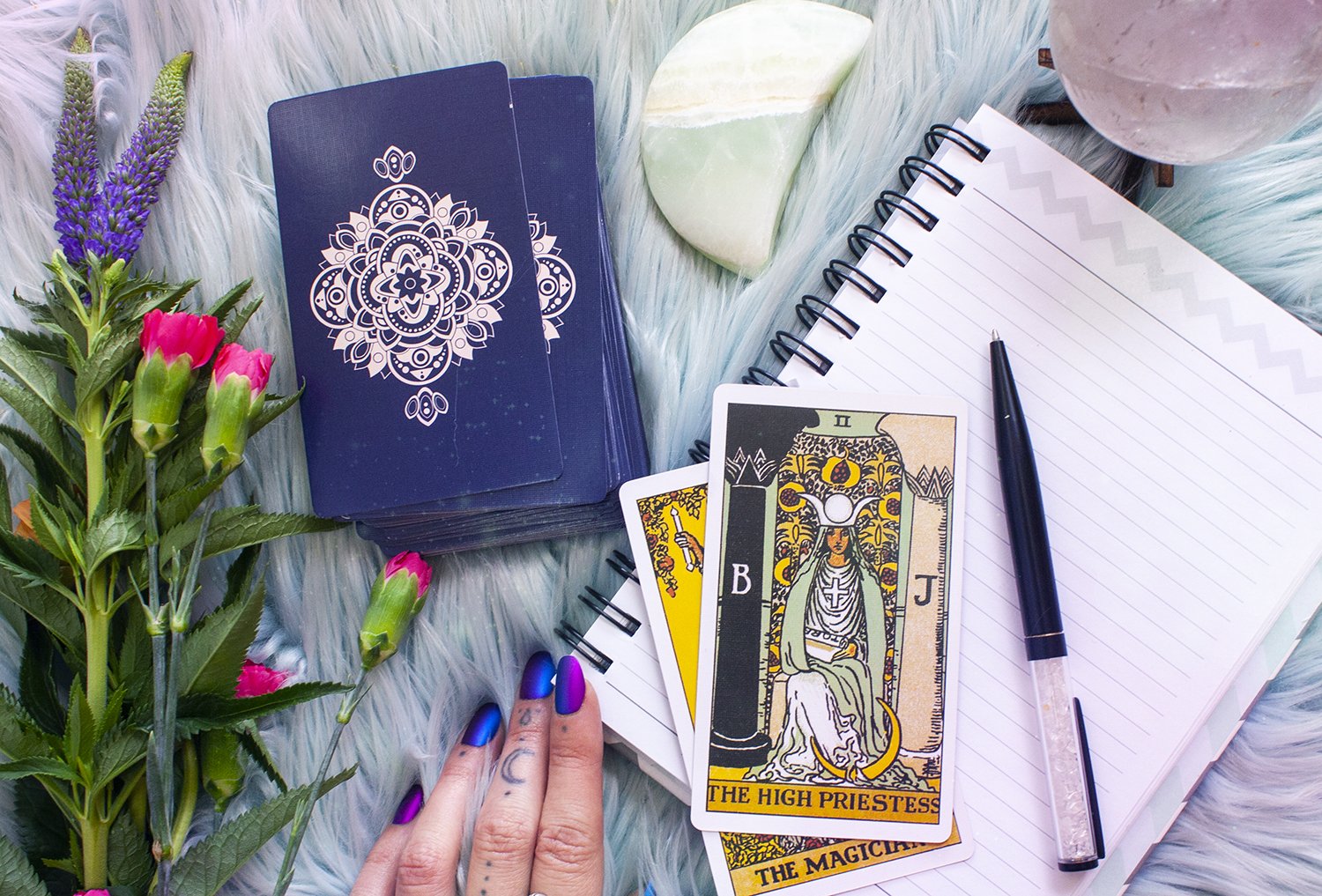
Divination is a fantastic way to work with the tarot, but you’re selling yourself short with your trusted tarot deck if you’re only using it to glean insights into the future. At its core, and in my opinion, the tarot is a powerful self-reflective tool. It’s here to share insights and guidance about what’s going on with you right now, at this moment. Telling the future is one of the most common draws to tarot, but the tarot truly brings a host of other benefits.
Read on for six ways to work with the tarot to grow and expand in new ways, aside from divination.
Working with Common Archetypes
The tarot is full of common archetypes that you will encounter or embody at different times in your life. Archetypes are timeless and universal energies that people can understand across cultures. For example, the archetype of the mother is something we can all understand on some level. Even if you do not have a relationship with your biological mother or have children of your own, the overarching energy of the archetype of the mother is something you can understand. Furthermore, you do not have to be a mother or a woman to embody the mother's archetype. Anyone can access and learn from the energy of motherhood.
The tarot is dripping with common archetypes, especially in the major arcana. The way the archetypes show up can be personal and vary from person to person. Most of the common archetypes appear in the major arcana, but they can also be found in the minor. Here are some of the archetypes I associate with the cards: the ego (the sun), soul (the moon), mother (empress), father (emperor), wizard (magician), child (the fool), lover (the lovers), martyr (hanged one), seer (hermit), and authoritarian (hierophant), etc. You may decide on different archetypal associations with different cards, and that’s fine.
So, how can you work with the archetypes of the tarot? Lots of ways! You can explore how the archetypal energies associated with the cards make you feel, you can look at the symbology on each card and explore how it makes you feel about its archetype, you can journal about the cards and their archetypal connections, and you can layer it into how you interact with and understand the cards.
Journaling
Journaling allows you to dive deep into the meaning and energy of each card. You’ll better understand the lessons each card wants to offer you through journaling about them. Truth be told, I’m not a big fan of journaling. Journaling with the tarot is different, though. I always write when I pull cards for myself. To begin journaling with the cards, you can work through them one at a time in order or intuitively select a card to journal about. Here are some suggestions for questions to ask yourself when you’re journaling about different cards:
How does this card make me feel?
What symbols or imagery jumps out to me?
Are there any archetypes or human themes that stand out to me in this card?
How does this card show up in my life right now?
What can I learn from this card?

Energy Readings
If you’ve followed my work long, you already know that I love all things energy! We are energy beings, and the tarot is another magical and beautiful way to work with your energy. What do I mean by this? Tarot is an excellent tool for reading your energy and understanding how to balance your energy.
Each card in the tarot corresponds with different energy. When you work with the cards specifically to assess your energy, the cards can act as a guide for what kind of energy you may need more or less of. Each card's energy can act as a signal that you either have too much or too little of that energy.
For example, if you pull some cards to determine what your energy needs to be more balanced and you pull loads of pentacles, that would be a sign that you need more grounding in your life to feel more balanced because the pentacles relate to the element of earth.
You could also consider pulling a card for each energy center or chakra in your body to get an idea of what each energy center needs to be in better balance. I dive into this more in-depth in my book, The Zenned Out Guide to Understanding Tarot.
Exploring and Understanding Common Correspondences
If you’re a visual learner, like I am, you’ll love working with the tarot to understand common correspondences better. I won’t spend too much time talking about this here because I already covered this in a previous post here.
Basically, each of the cards has a handful of correspondences (correspondences are simply energies that match or “play well together.”) The most common correspondences are the elements, astrological energies, and numerology. I’ve found that using the tarot as a tool to understand different types of energies better is immensely helpful, especially for visual learners. The cards' symbology and meanings will add a depth of understanding to your astrology, numerology, or elemental practice. You’ll also learn the tarot card meanings faster as well.
Shadow work
The cards of the tarot contain a complete range of human experiences. It does not gloss over the hard, scary, and sometimes earth-shattering parts of life. This is one reason why, I believe, so many are nervous about diving into tarot. It’s also why it can be such a powerful healing tool.
Your cards will not shield you from your shadow. Instead, they call you to cozy up to your shadow to understand better what it has to teach you. If the idea of shadow work is new to you, check out this previous post to learn more about what shadow work is. Here are a few ways to dive into shadow work using your tarot card deck.
Journal about the cards that make you the most uncomfortable. Use the questions above from the journaling section.
Ask questions specifically to explore your shadow, like “What parts of my shadow need healing and exploring?”, “ What do I have to learn from my shadow?” or “What parts of my shadow have I been avoiding?”
Spellwork & Magick
If you’re a fan of spellwork, altars, or magick, this one’s for you (it’s also another one of my favorite ways to work with my deck.) Because each tarot card carries a unique energy, they are perfect for adding energy and intention to spellwork, magick, and your altar. Here are a couple of ways to start working your cards into your magickal practice.
Place a card on your altar to invite in a specific kind of energy. For example, if you’re focusing on improving your intuition, you could place the moon, the high priestess, or the queen of cups on your altar as a reminder and energetic intention.
Add a card to your spell. For example, if you’re focusing on bringing more abundance into your life, you could include the nine of pentacles or the empress into your spell.

Want to learn more about working with the tarot? Order my book, The Zenned Out Guide to Understanding Tarot. Or, check out some of these posts: Understanding Tarot Correspondences, The Difference Between Tarot and Oracle, 7 Tarot Myths Debunked or Understanding Tarot Birth Cards.


6 Tips to Learn the Tarot Card Meanings Quickly
So you got your first tarot deck, did a couple of solo readings, and then never picked it up again? Or, you work with tarot regularly but find yourself frustrated with being so reliant on the guidebook? One of the biggest hurdles people face when getting started with tarot is learning the card meanings. This kept me from diving deep into the tarot for years, too; I get it!There are much easier techniques to learning the meanings of all of the cards besides memorizing a guidebook word for word for 78 different cards.

So you got your first tarot deck, did a couple of solo readings, and then never picked it up again? Or, you work with tarot regularly but find yourself frustrated with being so reliant on the guidebook? One of the biggest hurdles people face when getting started with tarot is learning the card meanings. This kept me from diving deep into the tarot for years, too; I get it!
There are much easier techniques to learning the meanings of all of the cards besides memorizing a guidebook word for word for 78 different cards. Not only is memorizing a guidebook of 78-card meanings not very feasible, but it’s also an intuitive disservice in working with the tarot.
What if I told you that you could have a robust knowledge of all 78 cards by learning only 36 correspondences? I know 36 is nothing to sneeze at, but here’s the thing, the 36 correspondences I’ll layout in this post will not only help you understand the energy of each tarot card but will also help you in nearly all other facets of spellwork and magick.

What are correspondences?
Correspondences are simply energies that play well together or match. Each card of the tarot has at least a couple of correspondences, and when you better understand each card's correspondences, you’ll also understand the energy of each card. The correspondences associated with tarot are not unique to tarot and relate to numerology, astrology, witchcraft, and more. Plus, there’s a good chance that you’re already familiar with some of the correspondences that I’m going to outline in this post. If you are, that’s great! You’re already a step ahead.
Before you dive in, correspondences and their meanings can be rich and deep. They can also vary somewhat from person to person. What I share here is enough to get you started to build a strong foundation, but I recommend digging deeper into the ones you’re less familiar with.
Dive deeper into tarot correspondences in my book, Understanding Tarot. You might also find that reading an introductory book on numerology or astrology will really deepen your understanding of those specific correspondences. You can also read up on numerology and the four elements right here on the blog! Click here for more on the elements and here for more on numerology.
Let’s dive in. Here are 6 tips to help you learn the tarot card meanings quickly.
1. Understand your learning style!
Before we jump into understanding the correspondences of tarot, you need to get super clear about how you learn and use that method as we dive into the correspondences. If you’re a visual learner, get a journal and start drawing and writing down what the correspondences below mean. If you’re an auditory learner, consider listening to an audiobook about the correspondences listed below. If you learn by doing, continue working with your tarot deck to weave this knowledge into your readings. Not sure how you learn best? Try a few different ways listed above and see what sticks.
2. Understand Basic Numerological Meanings
The largest part of a tarot deck, and for many, the trickiest cards to learn, are the numbered suit cards of the Minor Arcana (think 2 of cups and 4 of wands, etc.) Understanding the basic numerological meanings will make you feel MUCH more confident with these cards. There are ways to use numerology in the Major Arcana too, which you’ll be able to learn more about in my new book. For the minor arcana, use these numerological meanings to give you clues about what each card means.

New beginnings
Balance
Creativity
Foundations
Change
Partnership
Intellect
Mastery
Endings
This one is kind of unique to tarot because, in traditional numerology, you always reduce down to a single-digit between 1-9. Fortunately, the meaning often in regards to the tarot is pretty obvious. It points to an end of a cycle and transitioning to a new phase. It has a slightly different feel than 9 in that it signals a willingness to move on.
3. Understand the 4 Elements
Earth, air, water, and fire are, in my opinion, foundational in any magickal or divination practice. The elements are the energies that we’re made of and can be utilized in nearly all facets of a spiritual and magickal practice! Each of the four elements corresponds with a suit of the minor arcana, shown here.
Cups- Water
Pentacles- Earth
Swords- Air
Wands- Fire
Now that you know more about the meanings associated with the numbered cards of the minor arcana, you can also apply the corresponding element. Now you have two things to go off of to understand the energy of each card better. Here’s a list of how the energy of the elements express themselves.

There are ways to apply your understanding of the elements to both the minor arcana's court cards and the major arcana. I discuss these more in my book, but this is a great place to start!
4. Understand Zodiac and Planetary Meanings
We’ll begin to transition more to the major arcana for this one. Each of the major arcana cards corresponds with either a planet or a zodiac sign, giving it a unique energy.
The Fool - Uranus
The Magician - Mercury
The High Priestess - The Moon
The Empress - Venus
The Emperor - Aries
The Hierophant - Taurus
The Lovers - Gemini
The Chariot - Cancer
Strength - Leo
The Hermit - Virgo
Wheel of Fortune - Jupiter
Justice - Libra
The Hanged One - Neptune
Death - Scorpio
Temperance - Sagittarius
The Devil - Capricorn
The Tower - Mars
The Star - Aquarius
The Moon - Pisces
The Sun - The Sun
Judgment - Pluto
The World - Saturn
Here are examples of how these energies express themselves. Zodiac Signs

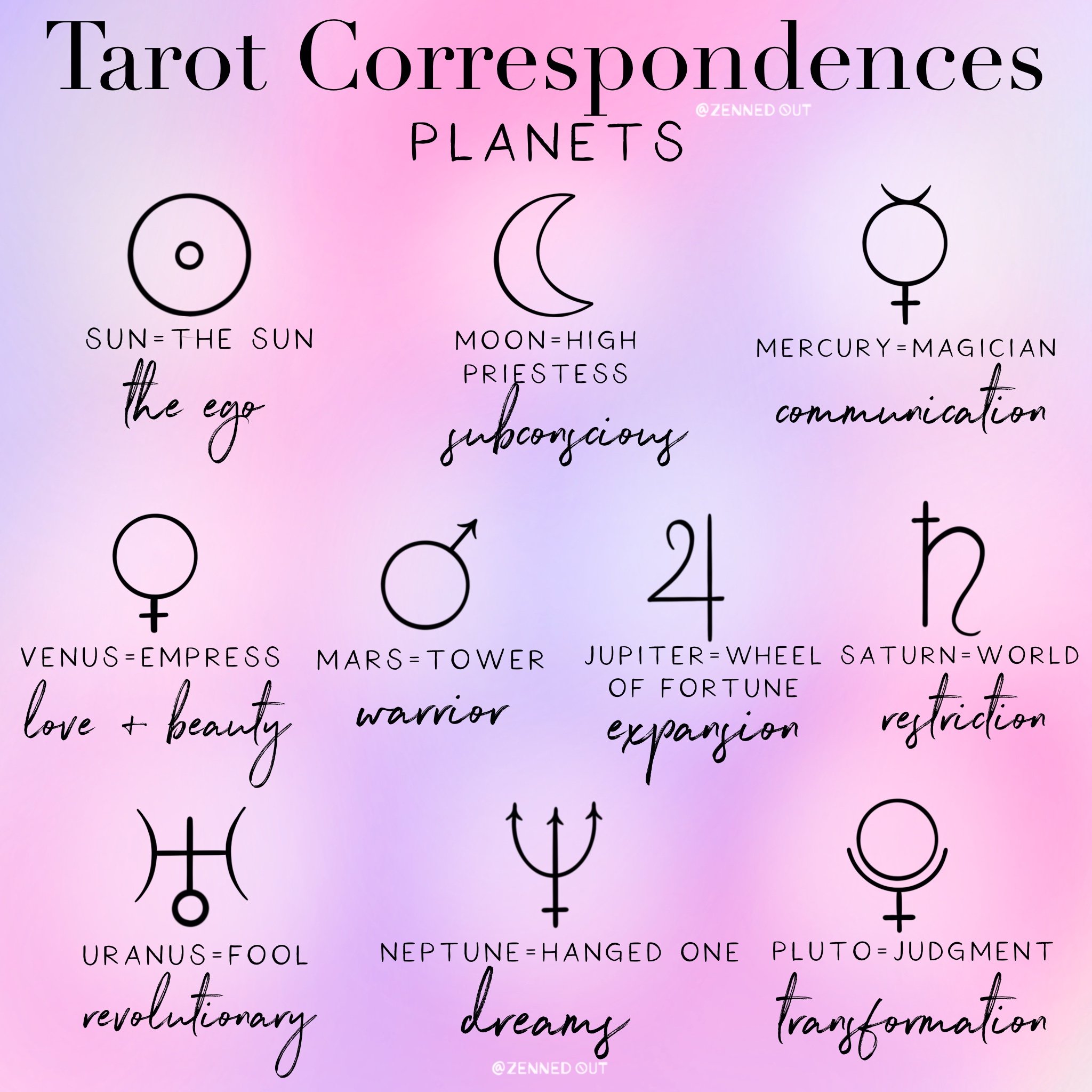
Planetary Meanings
Sun - Ego
Moon - Subconscious
Mercury - Communication
Venus - Love
Mars - Warrior
Jupiter - Expansion
Saturn - Restriction
Uranus - Revolutionary
Neptune - Dreams
Pluto - Transformation
5. Learn how Astrological Energies Correspond with the Elements
I imagine correspondences as a web of intersecting energies that play off of each other. When you understand how these different energies match up or repel each other, it will take your understanding of the tarot cards' meanings to a deeper level.
Each of the zodiac signs and planets corresponds to an element. Now, with your understanding of the elements and basic astrology, you can weave these meanings together. Here’s a list of how the planets, zodiacs, and elements correspond with one another.
Aries - Mars - Fire
Taurus - Venus - Earth + Water
Gemini - Mercury - Air
Cancer - Moon - Water
Leo - Sun - Fire
Virgo - Mercury - Earth + Air
Libra - Venus - Air + Water
Scorpio - Pluto - Water
Sagittarius - Jupiter - Fire
Capricorn - Saturn - Earth
Aquarius - Uranus - Air
Pisces - Neptune - Water
With this information combined, we can see that the Empress corresponds to Venus, the earth element, and Taurus. Therefore the Empress card relates to love, beauty, and creation from an earthly and material perspective.
6. Pair this Knowledge with your Intuition
Think of all of this correspondence knowledge as a way to bolster your intuition. They’re not the end all be all of learning the tarot, but they go a LONG way! The more comfortable and confident you become in understanding these correspondences, the easier it will be for you to intuit the card meanings for yourself and others without a guidebook. The correspondences are better than a guidebook because they give you nudges and insights about what the cards have to tell you, rather than a definitive answer.
Learn more about building up your intuitive muscles here in this previous post.
Now it’s time for you to put these tools into practice. Find a way to learn them that works for you, and watch your ability to understand the tarot card meanings flourish!


Dreamwork 101 // What is Dreamwork and How to Get Started in 5 Steps
Dreamwork is the practice of tending to our relationship with our dreams. We’re dreaming every night, but many of us barely remember our dreams, or if we do, don’t spend much time thinking about them or working with them.(How often have you dismissed a dream as, “oh, it was just a dream?”)

Dreamwork is the practice of tending to our relationship with our dreams. We’re dreaming every night, but many of us barely remember our dreams, or if we do, don’t spend much time thinking about them or working with them.
(How often have you dismissed a dream as, “oh, it was just a dream?”)
But dreams can have a lot to teach us and offer us when we enter into a deeper relationship with them. The dreamworld is rich with feelings, desires, needs, and possibilities. Our understanding of what the dreamworld evokes and presents can support our physical lives and our connections to ourselves.
In this blog post, I’ll share a bit about how to start a dreamwork practice of your own.
Dreamwork Lineage
First, I’d like to share my dreamwork lineage. What I know about dreamwork comes from the work of these folks in particular, as well as my own intuition and my ancestors:
These are wonderful people to go deeper into dreamwork with if you feel so called.
1. Support Dream Recall + Sleep
The simplest of ways to begin supporting your dreaming is by supporting sleep and dream recall. It’s difficult to consciously work with our dreams if we’re not sleeping well or can’t remember our dreams when we wake up. Everyone is different, but here are some things you might like to explore to support your sleep:
Set screen time boundaries for a certain amount of time before bed
Drink a tea to support your sleep, like chamomile (always do your own research and check with a professional before ingesting herbs)
Create your own sleep ritual that helps you shift into rest mode
Meditate and/or do a gentle, restorative yoga practice
Take a few minutes to journal brain-dump style to help clear your mind.
To support your dream recall, there are a few things I find helpful:
Set an intention to dream and to remember your dream(s) before you go to sleep (you can write this down, say it out loud, or just tell it to yourself silently)
Take a few minutes in bed in the morning before you get out of bed (or look at your phone) to give yourself space to remember your dream.
Create a dream altar and meditate at it before bed to welcome your dreams to come
Pay attention to the dreams you do receive by tending them (more on that below!)

2. Start a Dream Journal
This is probably the number one tip anyone you ask about dreamwork will give you, and with good reason! A dream journal creates a container for tending your dreams, helps solidify your intention to connect with your dreams, and helps you understand your dreams.
I recommend choosing a dedicated journal for your dreamwork and placing it on your dream altar when you’re not using it if you have one. As soon as you wake up (definitely before you look at any devices), put pen to paper and record your dream. Try recording your dreams in the present tense to honor its aliveness (for example, instead of "I was walking by a river,” try “I’m walking by a river).
If it feels available to you, you might like to marinate in the dream in bed for a few minutes before actually getting up and reaching for your journal to record.
3. Explore Dream Feelings & Textures
After you record your dream, there are many ways to work with it more deeply and explore the messages it might have for you.
I like to explore the dream textures: what are the textures, sights, smells, tastes, sounds of the dream? What do those senses mean for you and evoke for you? How do they make you feel? How does the dream, in general, make you feel?
4. Understand Dream Associations
As you work with the dream you’ve recorded, notice what stands out to you. Maybe your red dress feels particularly alive, or the hawk sparks something for you, or you feel curious about a figure in your dream.
Whatever you feel curious about, do a bit of freewriting about it. List out: what does this thing make you think of? How does it make you feel?
For example, some associations that come up with hawks for me:
Hawk feather
Maggie Smith’s poetry book Good Bones
Mothers
Protecting your children
Imagination
Play
Notice how I’m not so focused on the hawk itself, but I follow the threads of what each thing is associated with! Now I have something interesting to work with and can ask myself questions like, "what’s my relationship with play right now?"
Some of the associations you make might really surprise you and can offer deeper insight into your dream.
5. Assign Dream Correspondences
As you continue to work with your dreams, you start to develop some personal symbols and correspondences.
Like you saw above in my example with the hawk, I could make a section in my journal where I note that hawk led me to mothers and children and play. When I see a hawk again in my dream, I have that reference and can ask myself if/how it applies to this dream.
Over time, you can deepen your understanding of your own personal dream symbols and correspondences. I love this practice so much because, to me, it’s not about what a certain symbol means but about what it means to you, how it feels in your body, how it resonates with your ancestry. That’s what feels potent and powerful!
Dreams Aren’t Your Personal Vending Machine
It feels important to state that working with dreams isn’t just asking a question and receiving an answer. Generally, it’s not a simple or linear way of working. There isn’t one true or hidden meaning that we need to uncover.
In my eyes, dreams and the dreamworld are alive. So it truly is a practice of engaging in relationship with, of exploring. You might like to ask yourself, "how can I be in equal exchange with my dreams?" How can I honor the dream world and not just extract from it?
Dreams have such potential to expand us out of binary thinking and into visionary possibilities, especially if we acknowledge that power and allow them to take us there!
Going Deeper with Your Dreams
Another way to explore dream tending and go a bit deeper is by asking for a dream. I share how to do this in the dreamwork ritual I shared for Pisces season, which you can find here.
Feel free to contact us and share: how is your dream practice going? How is your relationship with your dreams evolving?


3 Daily Actions to Improve Your Intuition
You’ve probably heard the phrase that “intuition is a muscle.” If this phrase is new to you, guess what? Your intuition is a muscle that can be strengthened and honed! Some come into this world with extremely active intuitive gifts, just like some people come into this world with a knack for certain instruments or sports. But for most people, intuition is something that takes some practice.

You’ve probably heard the phrase that “intuition is a muscle.” If this phrase is new to you, guess what? Your intuition is a muscle that can be strengthened and honed! Some come into this world with extremely active intuitive gifts, just like some people come into this world with a knack for certain instruments or sports. But for most people, intuition is something that takes some practice.
So, if your intuition is a muscle, you might be wondering, “What should I be doing to take my intuition to the metaphorical gym?” As a naturally intuitive person, I’ve spent years working with and refining my intuition and psychic abilities (think of psychic abilities as a super fine-tuned intuition.) There are a few things that I’ve found are key in keeping my intuitive abilities strong and progressing my intuitive abilities into the psychic realm.
Before we jump in, I’d like to point out that we all experience intuitive and psychic information differently. If you’re not familiar with all of the “clairs,” I’m going to break them down for you here quickly. If you’d like to dive deeper into learning about the clairs, check out this past post here.
Clairvoyant: Sees visions, spirits, auras, and energy in the mind's eye or physically. Even though being clairvoyant is the most commonly referenced clair, it is by no means the most common!
Clairsentient: A common trait of empaths. Clairsentients can tap into people's energy fields, places, and things and sense information about them.
Clairaudient: May hear specific sounds for different kinds of energy or hear messages from spirit either aloud or within the mind. ⠀⠀⠀⠀⠀⠀⠀⠀⠀⠀⠀⠀⠀⠀⠀⠀⠀⠀
Claircognizant: Intuition on hyperdrive! The claircognizant knows things without provocation. Claircognizant information may appear in dreams or as a sudden gut instinct. ⠀⠀⠀⠀⠀⠀⠀⠀⠀⠀⠀⠀⠀⠀
Clairtangent: Another word used to explain this is psychometry, or the ability to know things by holding an object. However, clairtangency is not limited to holding inanimate objects and may receive information by placing their hands on people or animals.⠀⠀⠀⠀
Understanding the different ways intuitive information may come through will make understanding your intuition much easier.
Here are 3 Daily Activities to Strengthen Your Intuition. I suggest practicing these in this order, every day for at least a week, to see results.
1. Meditate Every Day For 10-20 Minutes
Regular meditation will get you in the habit of quieting your mind and tuning in to your intuition. Before you run off and say you don’t have time or can’t meditate, I want you to know that this doesn’t have to be 30-60 minutes of quiet meditation. My daily meditation practice usually ranges from 10-20 minutes, with rare longer meditations for special occasions.
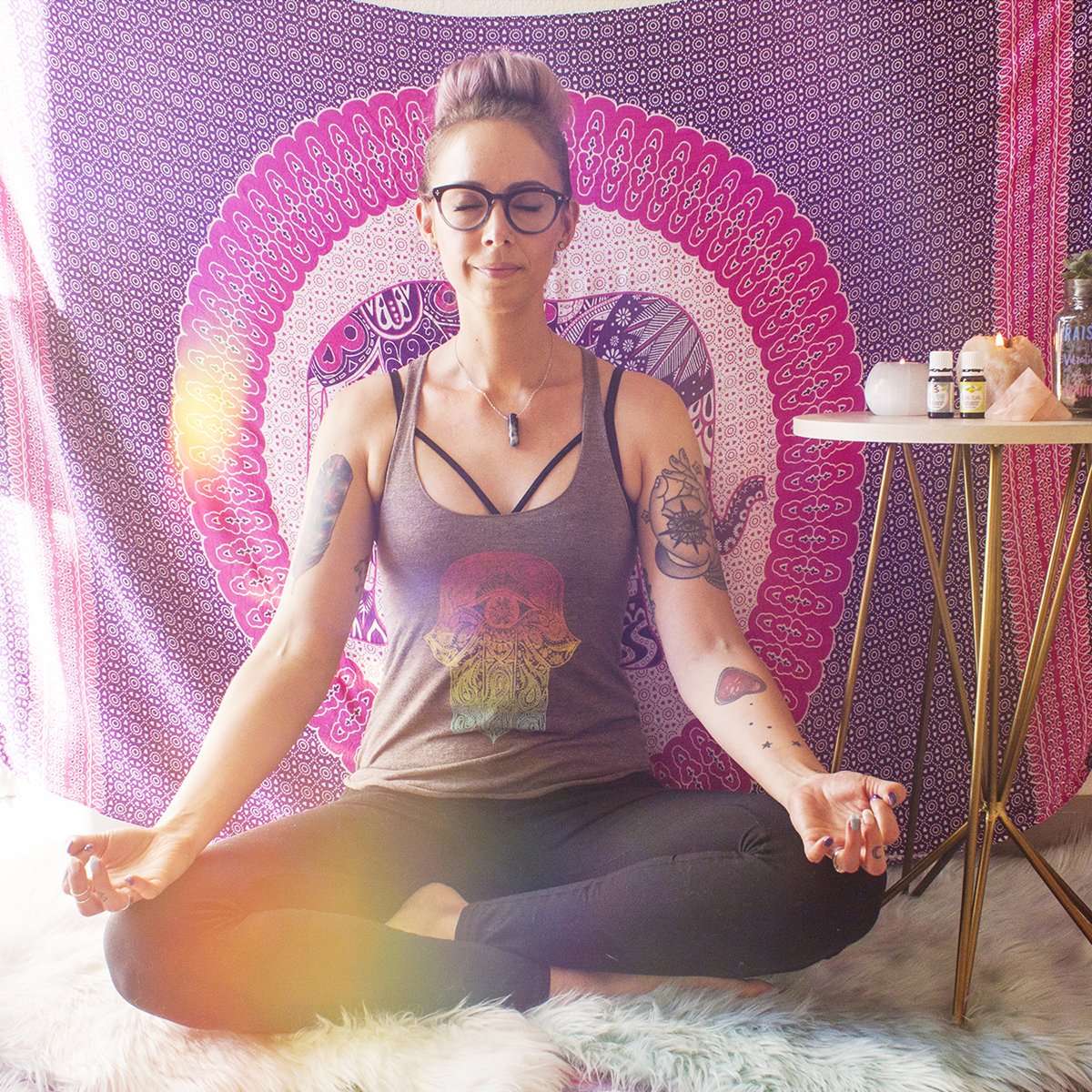
Even if you need to start at five minutes a day, you will notice a difference in your ability to tune into your intuition. Our modern world comes with many distractions, so it’s important to get in the habit of quieting your mind regularly. Learn more about creating a daily meditation practice in another post I shared here.
If sitting in meditation doesn’t work for you, I invite you to try different forms of mindfulness, like walking meditation, breathwork, or even becoming more aware of the present moment while doing daily chores and tasks.
Check out guided meditations and journeys here.
2. Select One Intuitive Tool to Work With Daily
Select one intuitive tool to work with daily. Yes, the same one. Working with the same tool consistently will take out some of the variables for strengthening your intuition and better learning how it presents. Spending daily time with a single intuitive tool will also help you gain confidence with that specific tool. This step is ideal to do right after your daily meditation. Try to work with your intuitive tool for 10-20 minutes.

Once you select your tool, you’ll want to develop a system to use daily that doesn’t take very long (unless you have the time, in which case, take as much time as you’d like!) I’ve found that it’s easier to stick with new practices if I make them short and easy to work into my routine. For example, if you’re working with tarot or oracle cards, ask for daily guidance and pull 1-3 cards. Alternatively, if you want to try a daily scrying practice, I suggest setting a timer for an amount of time you can commit to the practice daily.
Here’s a list of common tools. I’ve also linked them to previous blog posts if you’d like to learn more about them.
Oracle cards (get a free printable mini oracle card deck)
Runes (get a set of free printable rune tiles)
If there’s a different intuitive tool within your practice that isn’t listed here, that’s great too. Pick something that works for you and that you’ll be able to commit to using daily.
3. Connect with Intuition in Your Body
Last, and in my opinion, most important, tune into your physical body often while doing your intuitive practice. This is where the real muscle toning comes in to build your intuition. Learning how to connect your intuition into your body is important for a couple of reasons. First, you must have the ability to root into the physical body to expand into the spirit realm. Second, intuition will always show up in the physical body somehow, subtly as it may be. Learning how to sense how and where your intuition presents in your physical body is where the fine-tuning comes in.
Your intuition may show up as a sensation in the gut (there’s a reason for the term “gut feeling”), a sense of lightness in your heart, a flash of insight in your mind, a ringing in your ear, or something else. Your daily work will be to look for patterns in how your intuition speaks to you. How you recognize your intuition in your body will likely be unique and may vary for “yes” and “no” answers and the kind of intuitive work you’re doing.
To work this into your daily intuitive practice, check-in with your body often as you meditate and work with your intuitive tool of choice. Ask your body to show you where and how your intuitive voice speaks to you. The more you practice this, the more confident and familiar you’ll become with recognizing your intuition.
You can benefit from these intuition-building tools for as little as twenty minutes a day. I think you’ll see benefits in as little as a week, but of course, like all muscles, the longer you practice, the stronger it will get! Learn more about getting grounded and working with intuition through the third eye chakra in my book, Understanding Chakras.


The Importance of Pleasure + 3 Pleasure Rituals
We are spiritual beings, but here as humans, we have bodies. Our bodies experience a wide range of sensations and emotions — fear, anxiety, shame, joy, love, pleasure, and many more.Pleasure is one of the things that feels so specific to having a body - something that’s available to us through the tactile, through sensation, through what we can see and feel and touch.One of my favorite quotes about pleasure comes from the classic The Ethical Slut: “pleasure is a worthwhile goal in and of itself.”

We are spiritual beings, but here as humans, we have bodies. Our bodies experience a wide range of sensations and emotions — fear, anxiety, shame, joy, love, pleasure, and many more.
Pleasure is one of the things that feels so specific to having a body - something that’s available to us through the tactile, through sensation, through what we can see and feel and touch.
One of my favorite quotes about pleasure comes from the classic The Ethical Slut: “pleasure is a worthwhile goal in and of itself.”
Many of us have learned in our society that prioritizing pleasure is selfish, unnecessary, and even wrong. But pleasure is our birthright, and as the quote above shares — it is worth pursuing. We all deserve to experience pleasure.
In this blog, I’m sharing three rituals to help you tap into pleasure. Scroll down to read them!
Before we jump into the rituals, here's a list of ritual items that correspond to pleasure. Any of these items can be used to help you set the intention to invite in more pleasure. They are in no way necessary, but if you have them on hand, feel free to add them to any of the following rituals.
Pleasure Correspondences:
Crystals- rose quartz, garnet, carnelian, ruby
Element- Water
Colors- pink, red, orange
Tarot cards- The Empress, Queen of Cups, The Sun
Plants and scents- Rose, sandalwood, ylang ylang, patchouli, cinnamon
Shell- CowryEnergy points- Sacral
1. Presence Ritual
To me, one of the key ingredients to pleasure is presence. Many of us aren’t present throughout our days for many deeply valid reasons, from trauma to busyness, but when we aren’t present with our lives, I believe we miss out on a lot of the pleasure available to us in the moment.
For this presence ritual, all you’ll need to do is bring presence to something you’re doing in your day. Here are some examples of things you could try doing more mindfully to experience the pleasure within them:
Taking a walk
Eating a snack or a meal
Gardening
Watching the sunset
Having a conversation with someone you love
Listening to a song you love
Listening to a poem over audio
Moving your body in some way (yoga, dancing, running, etc.)
Having sex (solo or with others)
Whatever you choose, try to ground yourself beforehand with a few breaths, a hand on your body, petting your animal companion, or doing something else that feels grounding for you.
Throughout the experience, try to keep your breath deep and truly notice your embodied experience. When you feel yourself drifting back into your mind (I can almost guarantee this will happen, and that’s okay!), try to just notice that, release the thoughts, and return to your breath. Just keep showing up with your breath and your presence, and see how it helps you attune to the pleasure that’s available to you at this moment.
2. Exploring the Senses Pleasure Ritual
This ritual is inspired by a group experience I took part in at Spirit Weavers a few years ago called Pleasure Stacking.
For this ritual, you’ll want to gather items that can stimulate the senses (sight, sound, taste, smell, and touch). Get creative and use what you have around you! What items in your space open up possibilities for you, feel delicious, or spark curiosity?
Here are some things that I have used for this ritual to inspire you:
Crystals with different textures
Silky fabrics
Eye mask
A delicious tincture that tastes like cacao
Fruit
A CBD pre-roll
Velvety fabrics
Scented massage oil
Incense
Candles
A chain from a necklace
Sensual music

Once you select the items you'll be working with for this ritual, set yourself up somewhere you feel comfortable - I like to lay down on a yoga mat on the floor.
Light your candles and incense if you’re using them, and start to breathe deeply and tune into the senses.
The intention of this ritual is to connect with pleasure through the senses and through the body. The only guideline is to use your tools intuitively and keep breathing!
Try to really stay present with sensation. You might start by rubbing oil on your body and massaging yourself, experimenting with different pressures. You might trace the chain from your necklace over your belly, taste your tincture or fruit, let your music wash over you and find organic movement, breathe in the scent of your incense, or wrap yourself in different fabrics.
As you work with this ritual, notice what happens in your body. Notice what feels delicious in your body, what just feels weird, what your body wants more of. Can you give yourself what you need?
As you keep tuning into the senses, allow any organic pleasure mantras to arise like “I deserve pleasure,” “My pleasure is sacred,” or “My pleasure matters.”
Notice, too, if shame arises or thoughts telling you that you don’t deserve pleasure, it’s not okay to feel good, etc. Allow these thoughts and feelings to be here - it’s okay! They’re important information. See if you can breathe into them, honor them, and return to your journey through the senses.
Take as much time as you need. Remember that experiencing pleasure is your birthright.
When you’re ready, close this ritual by placing your hands somewhere on your body and speaking some loving words to yourself, to your body, to whichever parts of you need it.
Ritual to Open to More Pleasure
This ritual is intended to support you in feeling in your body where you hold blocks to pleasure - and moving them out in a fun way.
In my opinion, it’s not only our tears and pain that move energy and blockages. We can open to more pleasure, and we can move blocks out of our bodies in a fun and playful way as well. In this way, we become open to experiencing more pleasure and create a new pattern in the body.
For this ritual, feel free to put on some music and create a sacred space, whatever that means to you - (maybe lighting candles or incense, or not - you are a sacred space so you don't have to do anything but you can if you'd like!).
You’ll want to be somewhere you can be comfortable, like in your bed or on a yoga mat.
Once you're set up and comfortable, start to feel in your body where you hold blocks to pleasure. I recommend starting by sitting in meditation and breathing deep, feeling these places that are present today (and if you can’t feel anything, that’s okay too).
When you feel ready, start to move those blocks in a fun and intuitive way. Just play - see if you can let the moving of these blocks itself be fun and pleasurable.
You can use laughter, orgasm, shaking, yelling, roaring, moaning, hissing, vibrating, circling, dancing, moving, or anything else you can feel into or think of to move these blocks out of your body.
Can you let it be pleasurable? Can you let it be fun even to heal and explore and transmute? Let your creativity and intuition take over when it comes to moving these crunchy, sticky places out of your body.
When you feel complete, take a moment to breathe and notice your new state. Can you feel where there is more space, more openness, in your body? How does your connection to yourself feel now? Breathe, notice, and perhaps take a few moments to explore these questions and process your experience in your journal.
Looking for more pleasure-based rituals? Check out this blog post for more rituals for Beltane!
